
Short answer: Most Galápagos trips involve boats, and the sea is usually manageable, but the inter-island speedboats (about 2 hours) and open-water day tours can be bumpy, especially from July to December. If you are prone to motion sickness, the best plan is to take medication before you board, sit low and in the middle of the boat, keep your eyes on the horizon, eat lightly and skip alcohol the night before. Calmer months are generally January to June.
Last reviewed: November 20, 2026. We are a travel team, not doctors. This guide summarizes public medical guidance and what we see on our own tours. Talk to your doctor or pharmacist about medication, especially for children, older travelers and anyone who takes other medicines.
Where You Will Be on a Boat in the Galápagos
| Boat trip | Typical time | What it feels like |
|---|---|---|
| Inter-island speedboat ferry (Santa Cruz, Isabela, San Cristóbal) | About 2 hours each way | Small, fast boat on open water. Many travelers find these crossings the bumpiest part of a land-based trip. |
| Day tour to a site such as Kicker Rock | About 1.5 hours each way, plus time at anchor | Open-sea crossing, then calmer time at the site. See our Kicker Rock guide. |
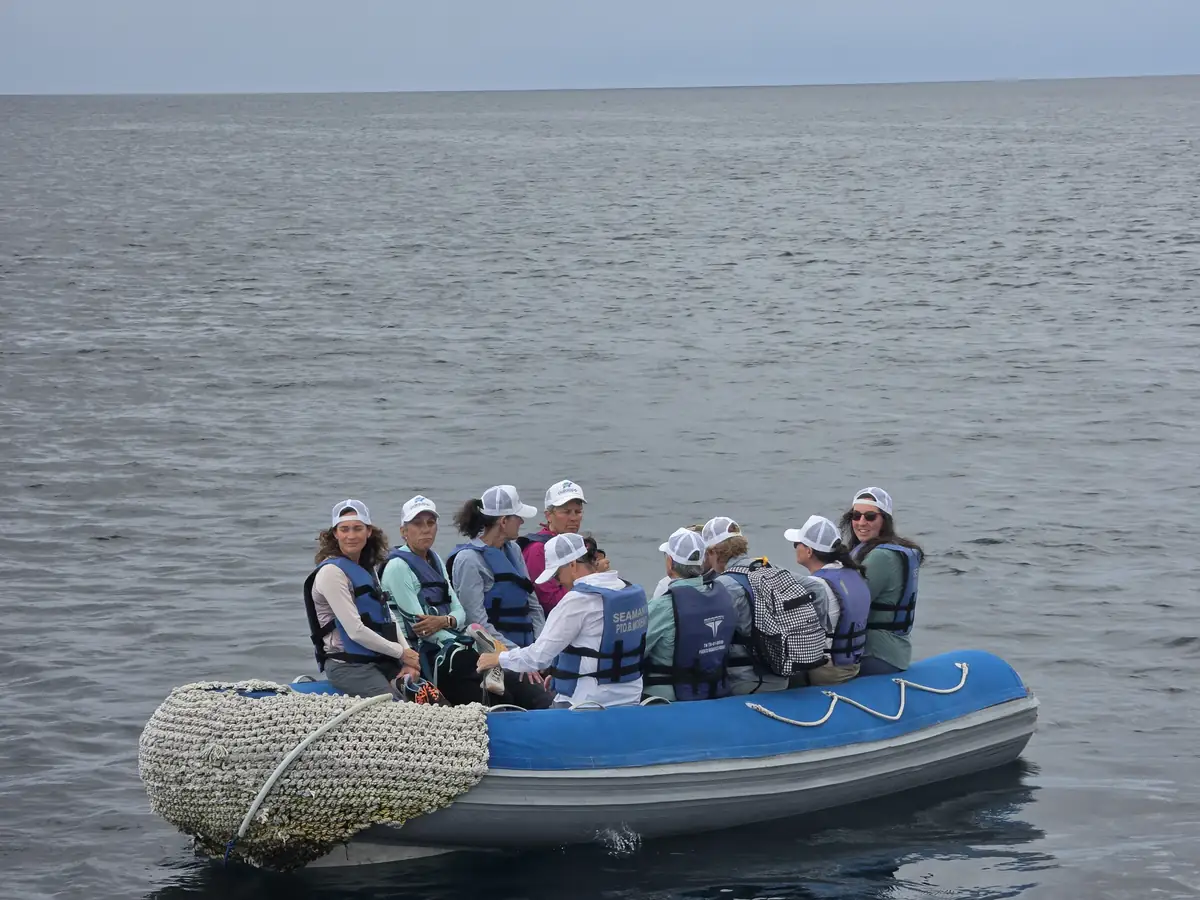
| Short panga (dinghy) rides | Minutes | Quick hops from boat to beach or pier. Rarely a problem on their own. |
| Cruise ships and yachts | Overnight crossings between islands | Ships usually move at night, so some of the motion happens while you sleep. Smaller yachts and catamarans move more than larger expedition ships. |
Boats are only part of the trip. Flights between the mainland and the islands, hiking and beach days are not an issue, which is why many people with motion sickness still enjoy the Galápagos with a few adjustments.
When Is the Sea Roughest?
Operators report calmer seas from about January to June and rougher conditions from July to December, with September and October often the choppiest. The cool, dry season (June to November) brings stronger currents and cooler water, and it is also the best season for sharks and whales. That means there is a trade-off: the months with the most dramatic marine wildlife are also the months with a livelier sea.
Weather is unpredictable, so use this as a guide, not a rule. As an example of day-to-day conditions, in mid-November 2026 Ecuador’s naval oceanographic institute (INOCAR) forecast swell of roughly 1.1 to 2.4 meters in waters west and south of the archipelago and described the sea state as moderate with no extreme events. Our guides check the conditions each morning.
Cruise or Land-Based: Which Is Easier If You Get Seasick?
There is no universal answer, and both have rough moments. A land-based trip has short, fast boat rides on day tours and ferries, so you can choose calm-looking days and sleep on solid ground every night. A cruise puts you on a ship for the whole trip, with overnight sailing, but you can take medication regularly, and larger expedition ships tend to move less than small yachts and catamarans. A good compromise for sensitive travelers is a few days based on one island, adding boat days only when the forecast is good. Our cruise vs. land-based guide compares the two in detail.
What Helps: Behavior and Positioning
The US Centers for Disease Control and Prevention (CDC) and tour operators agree on a handful of habits that make a real difference:
- Look at the horizon. A stable point of reference helps your brain and inner ear agree.
- Sit where the boat moves least. Stay low and toward the middle, and avoid the bow, where the motion is strongest. On a cruise, a lower-deck cabin near the middle is calmer.
- Get fresh air. Staying in a stuffy cabin or a closed cabin makes many people feel worse.
- Do not read or stare at your phone. Visual scanning while the boat moves is a common trigger.
- Limit head movements and keep your body aligned with the boat’s motion.
- Avoid alcohol, smoking and a short night’s sleep. All of them make symptoms worse.
- Eat light, not empty. A small, plain meal before departure is better than a heavy breakfast or an empty stomach.
- Breathe slowly. Controlled breathing at a normal resting rate has been shown in trials to help, with no side effects.
What About Medication?
The most important rule is timing: take the medication before symptoms start. Once you feel sick, your stomach slows down and tablets may not be absorbed. A few options are widely used, and which ones are available depends on your country:
| Option | When to take it | Things to know |
|---|---|---|
| Antihistamine tablets (for example meclizine or dimenhydrinate in the US, cinnarizine in the UK) | Roughly 2 hours before travel, following the label | Drowsiness is the most common side effect. Test a dose at home first. |
| Hyoscine (scopolamine) tablets, available in some countries | About 30 to 60 minutes before travel | Short-acting. Can cause dry mouth and drowsiness. |
| Scopolamine patch (prescription in many countries) | Applied hours ahead, often the night before, because it takes about 6 to 8 hours to work | Lasts up to about 3 days. Not suitable for everyone, for example people with glaucoma. Not for children. |
Ginger, special diets and acupressure wristbands have weak or mixed evidence. They are harmless for most people and some travelers swear by them, but do not rely on them alone on a rough day.
Children and older travelers. Start with behavioral measures, and ask a doctor or pharmacist before giving any medication to a child. Over-sedating young children can be dangerous, and scopolamine should be avoided in children. Children under 2 rarely get motion sickness.
A Simple Plan for Your Boat Day
- The night before: sleep well and skip alcohol. If you use a patch, apply it now.
- Morning: eat a light, plain breakfast and drink water. Take your tablets as directed, before you leave the hotel.
- At the pier: choose a seat low and toward the middle, in the fresh air if possible.
- On the boat: watch the horizon, keep your phone in your bag and breathe slowly.
- If you start to feel it: tell the guide, move to the middle of the boat and look at the horizon. Do not wait until you feel very sick.
- Afterwards: rehydrate and have something small to eat.
Tips for Choosing Tours and Operators
- Ask how long the boat ride is and how big the boat is. Shorter, larger-boat trips are easier.
- Ask whether the tour has a weather-cancellation policy. On our tours, if a trip is canceled for weather, we offer another date.
- Book the calmer months if you can, and keep a spare day in your schedule so a rough day does not cost you your must-see.
- Tell your guide at the start of the day. They can adjust where you sit and how the group moves.
If you want to mix land and sea, our San Cristóbal guide lists activities that do not need a long boat ride.
Frequently Asked Questions
It varies. The sea is often moderate, but inter-island speedboats and open-water day tours can be choppy, and conditions are generally rougher from July to December and calmer from January to June.
There is no single best option. Antihistamine tablets, hyoscine tablets and the scopolamine patch are commonly used, and the key is to take them before symptoms start. Ask your doctor or pharmacist which one suits you and test it before your trip.
Before you board. Many antihistamine tablets take about 2 hours to work, hyoscine tablets about 30 to 60 minutes, and a scopolamine patch needs 6 to 8 hours, so apply it the night before. Follow the instructions on your product.
Low and toward the middle of the boat, in the fresh air if possible, with your eyes on the horizon. Avoid the bow and avoid reading or looking at your phone.
Yes, many travelers do. Take medication, choose calmer months if you can, pick shorter boat trips and tell your guide. A single-island base with land activities is an option if you want to limit time on the water.
Neither is always better. Island hopping means short, fast boat rides but you sleep on land. A cruise means overnight sailing, and larger expedition ships move less than small yachts. Choose based on how you react to each type of motion.
Evidence is weak and mixed. They are harmless for most people, so use them if you like them, but do not rely on them as your only protection.
Related Guides
- Galápagos cruise vs. land-based tour
- Galápagos packing list
- Best time to visit the Galápagos
- How many days do you need in the Galápagos
- Is the Galápagos safe to visit in 2026
