
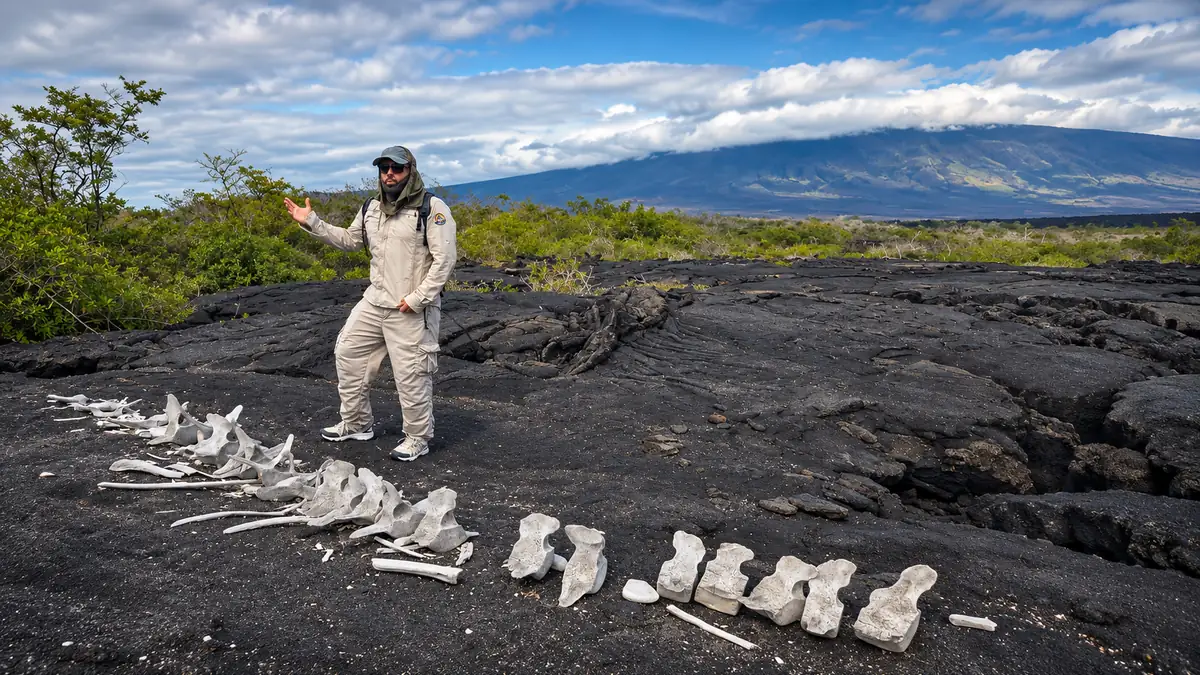
Short answer: to enter the Galápagos in 2026 you need a valid passport and a round-trip ticket, a Transit Control Card (TCT, US$20 per person), a luggage biosecurity inspection at the mainland airport, and payment of the national park entrance fee on arrival (US$200 for most foreign adults, US$100 for children under 12). Once you are on the islands, you must follow the park’s visitor rules, which were updated in 2026 and require an accredited naturalist guide for visits to protected areas.
The rules are simple once you see them together, but travelers often mix up the TCT and the park fee, forget to bring cash, or are surprised by the drone and photography limits. This guide puts the Galapagos entry requirements in order, from the airport counter to the trail.
Last reviewed: November 9, 2026. Fees and rules are set by Ecuadorian authorities and can change, so confirm the latest details on the official channels listed below before you travel.
Galápagos Entry Requirements Checklist
- Passport and a round-trip ticket. One-way entry is not allowed.
- Transit Control Card (TCT): US$20 per person, validated at the Quito or Guayaquil airport.
- Biosecurity inspection: your luggage is scanned and sealed at the mainland airport.
- National park entrance fee: paid on arrival, usually in cash.
- Travel insurance: carry proof of your policy; we list it as mandatory for all tourists entering Ecuador.
- An accredited naturalist guide for visits to protected areas.
The Two Payments: TCT vs. National Park Entrance Fee
| Transit Control Card (TCT) | National park entrance fee | |
|---|---|---|
| Cost | US$20 per person | US$200 for most foreign adults; US$100 for children under 12 |
| Where | Quito or Guayaquil airport, before you check in | On arrival at the Galápagos airport |
| How | Pre-register online, then validate at the Galápagos Government Council counter | Usually paid in cash in US dollars |
| Purpose | Controls entry and length of stay | Funds conservation, local communities and biosecurity |
You can start your TCT registration on the official Galápagos Government Council portal. Arrive at the airport at least two hours before your flight so you have time to validate it and clear the luggage inspection. Our guide on how to get to the Galápagos from the US walks through that morning step by step.
Who Pays What: Park Fees by Visitor Type
- Most foreign adults: US$200.
- Children under 12: US$100.
- Infants under 2: exempt, according to the 2024 announcement.
- Citizens of Bolivia, Colombia, Peru, Argentina, Brazil, Paraguay and Uruguay: US$100, according to the 2024 announcement.
- Ecuadorian nationals: US$30.
Why the Fee Doubled, and Where the Money Goes
The entrance fee rose from US$100 to US$200 on August 1, 2024, the first increase since 1998. The announced split sends 40% to the Galápagos National Park Directorate, 30% to local municipal governments, 20% to the Galápagos Governing Council and the remainder to the biosecurity agency. According to the park’s 2025 visitor report, the update did not reduce demand: arrivals reached 290,404 in 2025, up 4%, with foreign visitors up 16%. Travelers sometimes ask why the cost is so high, and we answer in our guide to what a Galápagos trip costs in 2026–27.
Other Rules Worth Knowing Before You Fly
- Length of stay: tourist stays are limited to a maximum of 60 days per year.
- Round-trip tickets only: one-way entry is not allowed.
- Biosecurity: do not bring fresh fruit, vegetables, seeds, plants, soil or animal products. Your bags are inspected and sealed at the mainland airport, and inspections continue between islands.
- Visa: US citizens do not need a visa for tourist stays of up to 90 days in Ecuador. Check the rules for your nationality.
The New Visitor Rules for the Galápagos National Park (2026)
In late August 2026, Ecuador’s environment ministry adjusted the visitor rules for the protected areas, and in September the Galápagos National Park shared them with the public. In plain language, these are the ten rules:
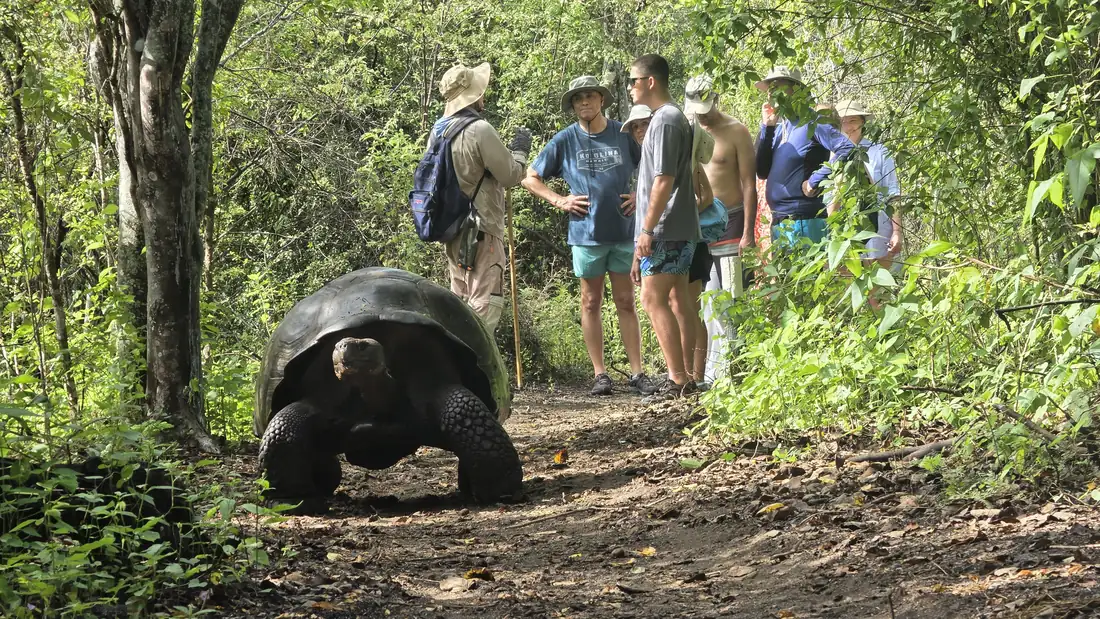
- Use an accredited guide. Visits happen with a certified Galápagos naturalist guide.
- Use authorized operators. Tourism services, boats and activities must be authorized.
- Stay on trails and in designated areas, including beaches, marine zones and marked spaces.
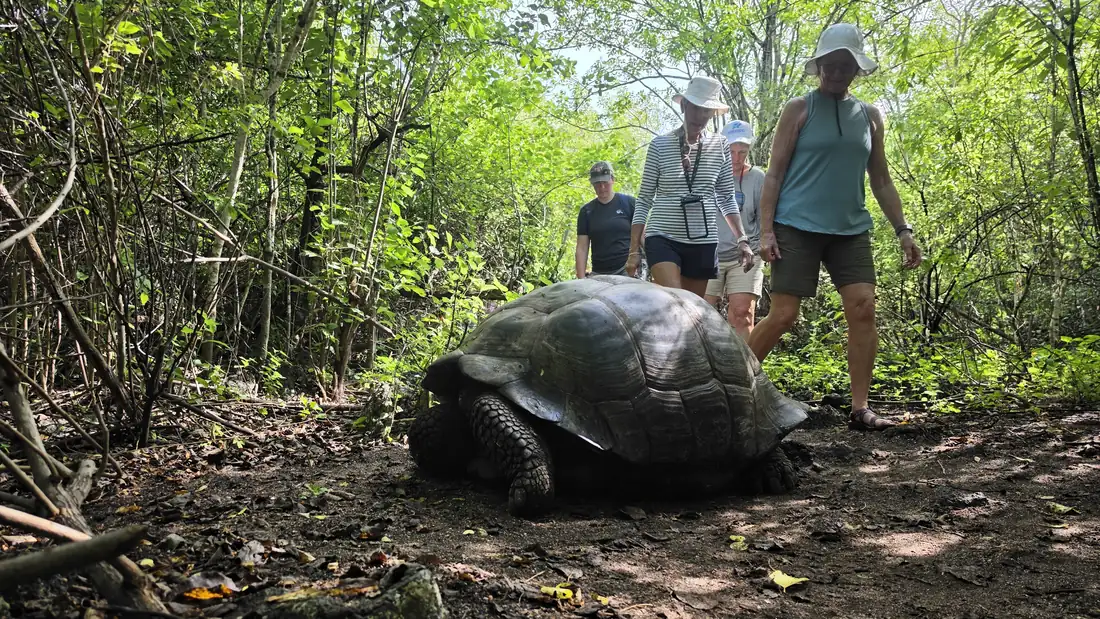
- Keep a minimum distance from wildlife, adjusted to the activity you are doing.
- Do not disturb animals. Do not touch, feed, chase, handle or interfere with wildlife.
- Take photos without flash. Professional filming and photography, drones, remote cameras and aerial or underwater equipment need prior authorization.
- Do not publish material obtained through unauthorized activities.
- Camp only at authorized sites.
- Do not take natural items, such as sand, coral, shells, volcanic rock, plant material, wood or animal parts.
- Take your waste with you out of the protected area.
Guides, operators and boat crews must explain these rules to visitors, and the park publishes them on its website and social channels. In practice, this means leaving the drone at home and taking souvenirs only as photos.
Closures and Changing Conditions
Visitor sites can close temporarily for safety, as happened after the heavy rains of late October 2026. On November 7, the government reported that some sites had reopened and others remained closed while inspections continued. Check the park’s official channels before you plan a specific site, and read our update on El Niño and the Galápagos in 2026–27. If you are building a multi-island plan, our island hopping itineraries explain how to keep it flexible.
Common Mistakes at the Airport
- Arriving late and not leaving time to validate the TCT.
- Forgetting US dollars in small bills for the park entrance fee.
- Packing fresh fruit, seeds or plants in your luggage.
- Booking a one-way ticket or a same-day connection from your international flight.
- Assuming a drone is allowed without authorization.
Get Help With Your Galápagos Trip
Our local team in Puerto Baquerizo Moreno handles airport reception, transfers and the right island order, and we can include flights, the TCT and park entrance as a US$840 per person add-on on our island hopping programs. Message us on WhatsApp or contact us with your dates.
Frequently Asked Questions
The national park entrance fee is US$200 for most foreign adults and US$100 for children under 12. It is paid on arrival, usually in cash, and is separate from the US$20 Transit Control Card.
It is a US$20 per person card required for every visitor to the Galápagos. You pre-register online and validate it at the Galápagos Government Council counter at the Quito or Guayaquil airport before check-in.
The fee is usually paid in cash in US dollars, and cards may not be accepted. Bring small bills.
US citizens do not need a visa for tourist stays of up to 90 days in Ecuador. Everyone still needs a TCT and must pay the park entrance fee. Check the rules for your own nationality.
Not without prior authorization. Drones, remote cameras and professional filming equipment require authorization from the national park.
Yes. Visits to the protected areas must be made with an accredited Galápagos naturalist guide.
Tourist stays are limited to a maximum of 60 days per year.
Sources
- Primicias: the new rules for visiting the protected areas of the Galápagos National Park
- Galápagos National Park Directorate: annual visitor report 2025
- Travel Trade Journal: Galápagos entry fee doubles from August 2024
- Voyagers Travel: new digital compliance for Galápagos entry requirements
- Galápagos Government Council: Transit Control Card registration
