
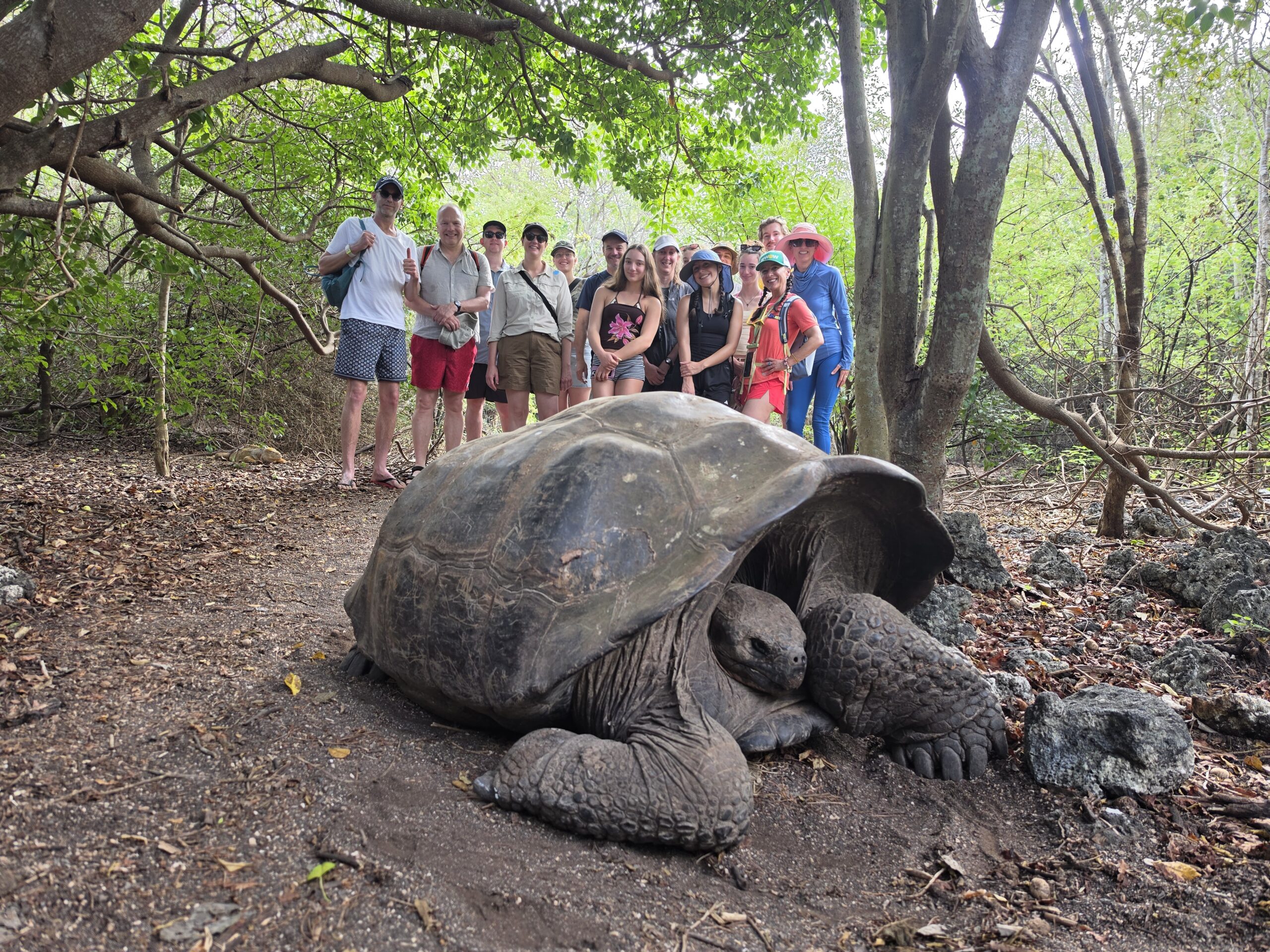
Source: this article draws on the interview and data published in Volta ao Mundo magazine (“Planeta Verde” section, January 2026 issue, pages 24–25), featuring naturalist guide Marco Andrés Vizcaino Garcia. Quotes have been translated from the original Portuguese; visitor figures are credited to the Galápagos National Park Directorate and the Galapagos Conservation Trust.
Galápagos is under pressure. That is the blunt message behind a recent feature in the Portuguese travel magazine Volta ao Mundo, which turned to one of the archipelago’s most respected naturalist guides — Marco Andrés Vizcaino Garcia — to explain what is really happening as tourist numbers climb toward record highs. His answer: overtourism in Galápagos is not just an environmental problem. It’s a political and economic one, and the way travelers choose to visit makes a real difference.
Meet Marco Vizcaino: From a Fishing Family to Certified Naturalist Guide
Born into a family of Galápagos fishermen, Marco discovered his calling at just 15 years old, while volunteering at a giant tortoise breeding center. Today he works as a certified naturalist guide based on San Cristóbal Island, and believes that supporting local communities is the real path to protecting the archipelago.
As Volta ao Mundo describes him: “Born into a family of fishermen, Marco Andrés Vizcaino Garcia is one of the most respected naturalist guides in Galápagos, with a journey that unites his family legacy with environmental conservation.”
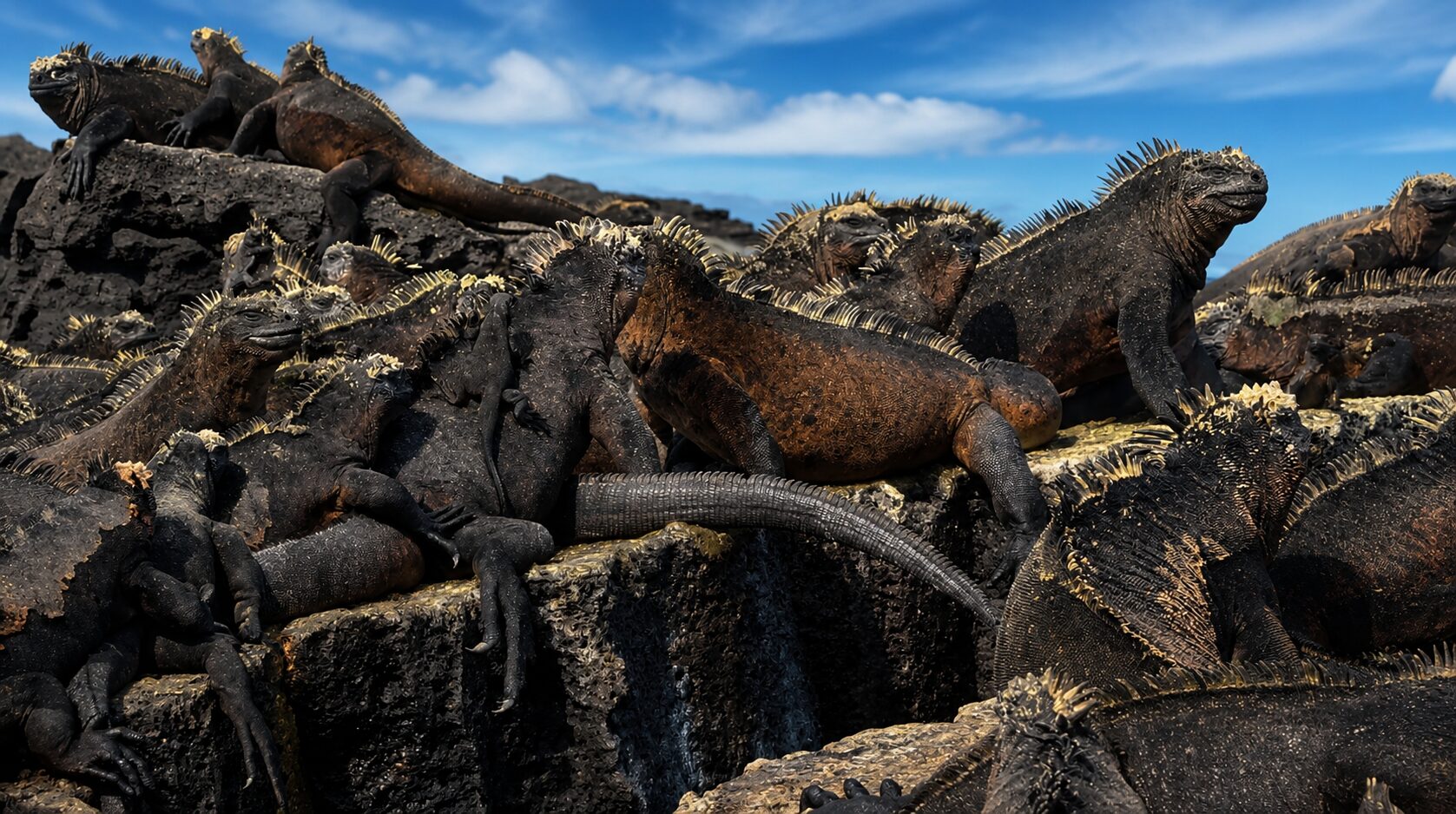
The Real Challenge Isn’t Just Environmental — It’s Political
Asked directly about the challenges of sustainable tourism in Galápagos, Marco didn’t shy away from the uncomfortable part of the answer:
“There are the classic environmental challenges — invasive species, waste, freshwater scarcity — but, honestly, one of the biggest problems stems from political interests. Governance changes constantly, and this turnover makes the system vulnerable. Powerful tourism groups with political connections are monopolizing the main tourist activities. Large multinationals now own several cruise ships, but they take their profits out of Galápagos and leave their waste behind. The real burden falls on the islands.”
Becoming a Certified Naturalist Guide: One of the Toughest Certifications Around
Every visitor group in Galápagos is required by law to be accompanied by a certified naturalist guide. According to Marco, becoming one is far from easy:
“There are about 800 certified guides, and the certification process is very demanding. The full training course is only held every 8 to 10 years. Hundreds of people apply, but the quota is limited to 140-150 spots. The admission exam covers general culture, mathematical reasoning, abstract reasoning, in-depth knowledge of Galápagos — ecology, history — and language. After passing, training continues for months: guides learn not only about nature, but also about ethics, visitor management and community engagement. Because of the selection process, being a guide is a serious professional commitment, and only the truly dedicated and capable become certified.”
Surviving the Pandemic: Science, Community, and the Galápagos Barcode Project
Ask Marco how he survived the pandemic months, and the answer says a lot about how precarious life is for most guides in Galápagos:
“It was one of the most difficult periods of my life. Most naturalist guides are self-employed, without a fixed salary, health insurance, or government support. But I was lucky because of my academic specialization: I’m a biologist with training in biotechnology and molecular biology. During the crisis, I joined the Galápagos Barcode Project, which hired local residents — single mothers, guides without income — to work in molecular biology, such as DNA barcoding and genetic monitoring. This gave me essential income when tourism revenue was zero.”
Marco’s Advice: Book Local, Not Just “Eco”
The final question in the Volta ao Mundo interview asked what advice Marco would give readers planning a trip to Galápagos. His answer is essentially a checklist for responsible travel:
“Galápagos isn’t just an ecological Eden — it’s also a living, pulsing socioeconomic system. The people here are important for keeping this place safe, prosperous, and authentic. So my recommendations are to book with agencies and operators based in Galápagos, not just with large mainland or multinational companies. Use platforms like Galaapp.net, created to support local groups that are often overlooked by traditional tourism, such as artisans, small business owners, and community members. Also ask if your cruise or tour is locally owned: when the company belongs to Galápagos people, the revenue directly supports the islands’ economy. While you’re here, follow park rules, respect biosecurity, minimize the use of disposable plastics, and travel with an environmentally responsible mindset. True sustainability is that which ensures Galápagos remains a place where Nature and community prosper together.”
Galápagos Tourism by the Numbers: 2013–2024
Volta ao Mundo paired the interview with a visitor timeline, sourced from the Galápagos National Park Directorate and the Galapagos Conservation Trust. It shows just how fast — and how unevenly — tourism has grown:
- 2013 – 215,691 visitors: the Galápagos Islands surpass the 200,000-tourist threshold for the first time.
- 2017 – 241,811 visitors: at UNESCO’s request, the Ecuadorian government adopts a zero-growth policy for land-based tourism.
- 2019 – 271,238 visitors: an adult female of the tortoise Chelonoidis phantasticus is discovered on Fernandina Island — a species believed extinct for more than 100 years.
- 2020 – 72,591 visitors: with covid-19, tourism shuts down for four months and more than a hundred programs are suspended.
- 2021 – 136,336 visitors: the national park reopens to the public in July, averaging six thousand visits a month, versus an average of 23,000 in prior years.
- 2023 – 329,475 visitors: tourism hits a new record, and environmentalists and researchers warn of the risk of ecological collapse.
- 2024 – 279,277 visitors: the national park entrance fee for international visitors doubles, from $100 to $200 per person.
Sources: Galápagos National Park Directorate; Galapagos Conservation Trust, as published in Volta ao Mundo, January 2026.
Why Book Your Galápagos Trip with Galaapp
Being named directly in an international magazine as an example of a locally-owned platform is not something we take lightly. It reflects exactly what Galaapp was built to do: connect travelers with Galápagos-based guides, boats, and small businesses, so that the money you spend actually stays on the islands.
Ready to plan a trip that supports the people protecting Galápagos? Explore our tours with certified naturalist guides or browse our locally based Galápagos cruises.
According to Marco Vizcaino, there are about 800 certified naturalist guides in Galápagos. The full training course is only offered every 8 to 10 years, and only 140-150 of the hundreds of applicants are accepted each time.
It’s a molecular biology initiative that hired local residents — including single mothers and guides left without income — to work on DNA barcoding and genetic monitoring during the COVID-19 tourism shutdown, providing essential income when tourism revenue was zero.
When a cruise or tour company is owned by Galápagos residents, the revenue it generates stays on the islands and directly supports the local economy and conservation efforts, rather than flowing to mainland or multinational owners.
As reported by Volta ao Mundo, the entrance fee for international visitors doubled in 2024, from $100 to $200 per person.
It refers to the pressure created by rapidly rising visitor numbers — which hit a record 329,475 in 2023 — on the islands’ fragile ecosystems, infrastructure, and local communities.
Conclusion
Galápagos is at a turning point. Visitor numbers have more than doubled since 2013, and 2023 set an all-time record — but as Marco Vizcaino told Volta ao Mundo, the way forward isn’t fewer travelers so much as better-informed ones. Choosing a locally-owned operator, respecting park rules, and understanding what’s really at stake are small decisions that add up to a real difference for the islands and the people who call them home.
Source: Interview with Marco Andrés Vizcaino Garcia and Galápagos tourism data, as published in Volta ao Mundo magazine, “Planeta Verde” section, January 2026 print edition (pages 24–25). No public link is available, as this is a print-only feature. Visitor figures: Galápagos National Park Directorate; Galapagos Conservation Trust.
